GinaStars.com
Most aura colors are relatively common. Green appears in people who are in healing phases — which describes a large portion of the population at any given time. Blue appears in people oriented toward communication and truth. Red in people grounded in the physical world. These are not rare states.
Purple is different. Not because it is better — aura colors are not ranked — but because the internal state that produces a purple aura is genuinely uncommon. It requires a high level of intuitive development, significant spiritual awareness, and a particular sensitivity that has been cultivated rather than suppressed.
A purple aura is not a status symbol. It is a description of a particular energetic configuration — one that comes with gifts that are difficult to ignore and challenges that are equally difficult to dismiss.
What Purple Is in the Aura System
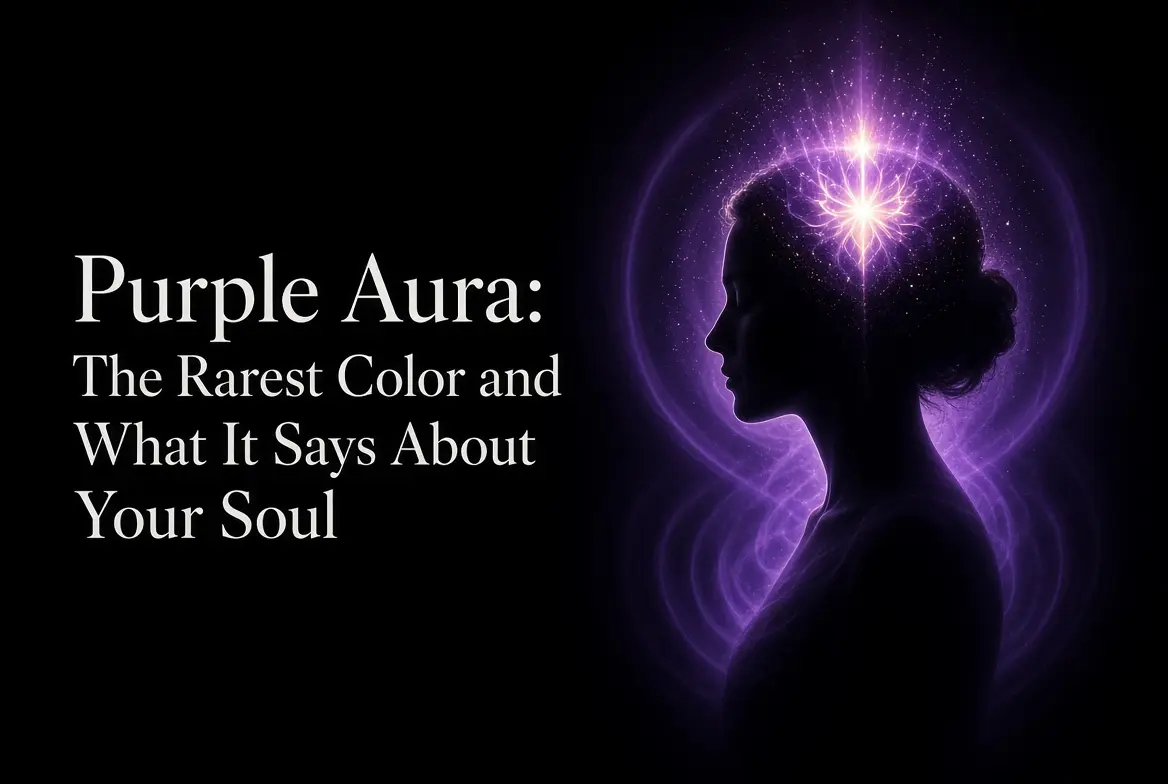
Purple is associated with the crown and third eye chakras — the two centers most connected to intuition, spiritual awareness, and the capacity to perceive beyond ordinary sensory experience. When purple is dominant, these centers are particularly active.
The specific shades carry slightly different qualities. Violet — lighter, cooler — tends toward spiritual illumination. Deep indigo carries the qualities of the third eye: penetrating perception, seeing through surface presentations, knowing things before the logical explanation arrives. Rich royal purple carries both, with an additional quality of purpose — the sense that the person has a particular reason for being here.
What It Says About the Person
People with purple auras are almost universally described by others as perceptive in ways that are difficult to explain. They know things — not always in ways they can articulate, often as a felt sense that arrives before any logical path to that conclusion is visible. They walk into situations and read them accurately in ways others only understand later.
This is not psychic ability in the dramatic sense. It is sensitivity to information that is already present — the quality of a silence, the specific way someone’s energy changes when something is wrong, the feeling of a room before anyone has said what happened in it. Purple aura people pick up this information before they can name where it came from.
They tend to be deeply private about the most important parts of themselves. Not secretive in a defensive sense — genuinely selective about who receives access to the interior. The exterior most people see is warm, curious, engaged. The interior is reserved for the very few who have earned it.
The Challenges
The sensitivity does not selectively receive only what is useful. It receives everything. Purple aura people absorb the emotional states of their environments — not by choice, but structurally. A crowded, emotionally dense environment costs them more than it costs most people. Extended time with chaotic or emotionally volatile people produces depletion that can take days to clear.
Most purple aura people learned somewhere early in life that their sensitivity was a problem. Too much, too intense, too easily overwhelmed. The learning to manage and contain it is almost universal in this group. What gets lost in the containment is usually the very quality that is most valuable.
The challenge of the purple aura is not the sensitivity itself. It is the culture that was built around managing the sensitivity rather than inhabiting it. Most purple aura people spend years getting back to what they actually are.
What Supports a Purple Aura
Solitude is not optional — it is maintenance. Without enough genuine alone time, the field becomes congested with other people’s energy and the person’s own signal becomes unclear to them.
Creative work produces the same clearing effect, provided it is genuinely expressive. Any form that moves the inner life outward into expression — writing, art, music, healing work. Without that outlet, the perceptive capacity turns inward and becomes self-consumption rather than insight.
And people who can handle the depth. Not people who share their perceptive capacity — people who are not frightened by it. The partner, the friend, the colleague who can stay in the room when the conversation goes somewhere real, who does not need the depth managed into something more comfortable. That person is rare and worth more to a purple aura person than almost anything else.
If you have a purple aura and have been told your whole life you are too much — the assessment was wrong about the quantity and right about the quality. You are a lot. That is not the problem. The problem was the environments that could not hold it.
— GinaStars.com