GinaStars.com
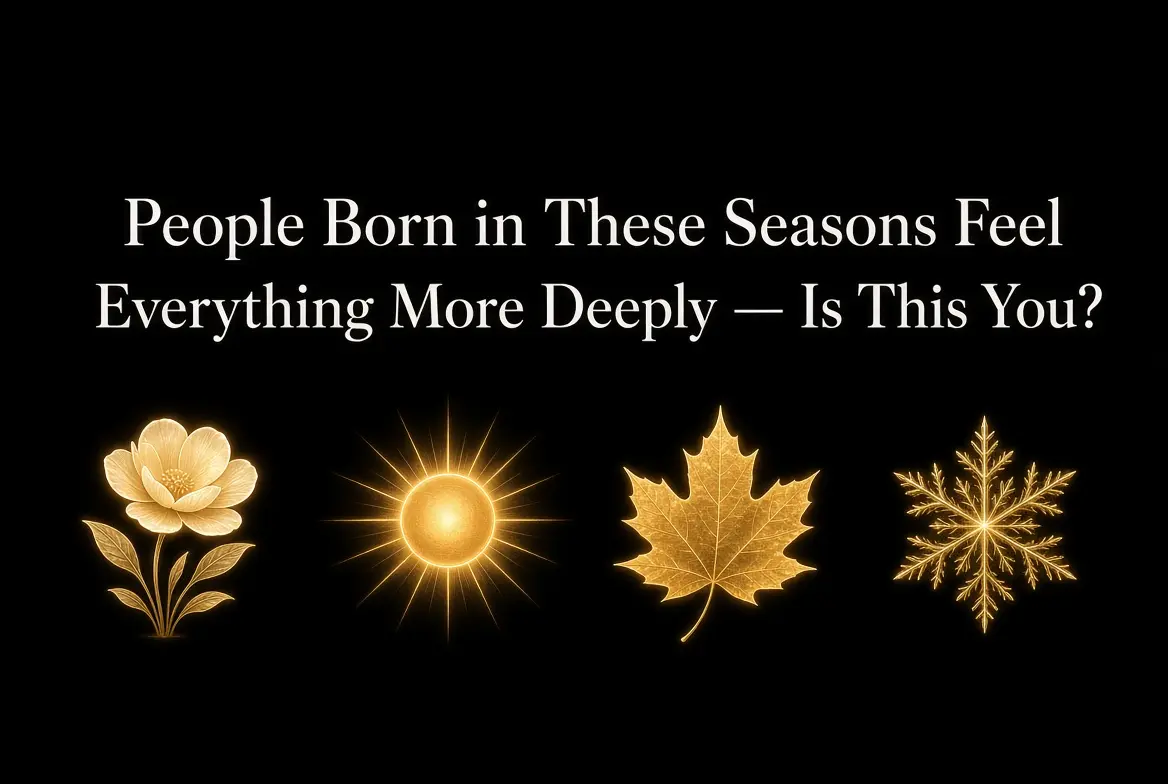
The idea that the season you were born in affects your personality and your sensitivity is older than most modern psychology. It appears in traditional Chinese medicine, in Ayurveda, in various indigenous seasonal frameworks, and in astrology in the specific form of the sun sign — which is determined by the season of birth rather than any other factor.
What is more recent is the scientific research on this question. A 2014 study published in the Journal of Psychiatry and Neuroscience found measurable differences in monoamine levels — neurotransmitters that regulate mood, sensitivity, and emotional processing — based on the season of birth. People born in winter and spring showed different dopamine and serotonin regulation patterns than those born in summer and autumn. This is not destiny, but it is biology, and it is worth knowing about.
Here is what the research and the traditions together suggest about which seasons produce the most emotionally sensitive people — and what that sensitivity actually means.
Sensitivity is not fragility. The seasons that produce the most emotionally sensitive people are the same ones that produce the most perceptive ones. The depth of the feeling and the depth of the perception come from the same source.
Winter — December, January, February
Winter is the season that most consistently produces people with heightened sensitivity across traditions and, increasingly, across research. The 2014 monoamine study found that winter births were associated with higher serotonin transporter density — a finding that correlates with both greater emotional sensitivity and greater susceptibility to mood variation in response to environmental conditions.
In traditional frameworks, winter is the season of inwardness — the time when the natural world turns its energy downward and inward, when darkness dominates, when the quieter interior life is more accessible than the busy exterior one. People born during this inward season tend to carry this quality throughout their lives: a stronger orientation toward interior experience, a more developed inner life, and a sensitivity to the quality of their environment that others often do not share.
Winter-born people frequently report that they absorb the emotional states of the people and environments around them more readily than other people seem to. They are not imagining this. The biology is real. What varies is whether this quality has been developed into a genuine perceptive capacity or whether it has been treated as a burden to be managed.
Autumn — September, October, November
Autumn is the season of completion and transition — the time when the natural world is visibly in the process of releasing what it no longer needs, when the boundary between what was and what will be is most visible. People born in autumn carry this quality of transition awareness throughout their lives.
Autumn-born people tend to be acutely sensitive to change — not because change frightens them, but because they perceive it more clearly than most. They notice when something is ending before others do. They sense when a shift is underway in a relationship, a situation, or a person before the shift has become visible in any external behavior. This can feel like intuition. Biologically, it may relate to the heightened sensory processing that the autumn birth season is associated with in several research contexts.
The specific emotional sensitivity of autumn births tends toward depth rather than reactivity. These are not people who are easily overwhelmed — they are people who go far into an experience rather than across the surface of many experiences. That depth is its own kind of intelligence, even when it makes certain situations harder than they need to be.
Spring — March, April, May
Spring is the season of initiation — new life, new energy, the return of what was dormant. People born in spring tend to carry an unusual sensitivity to possibility and to the feeling of things beginning. They are often highly attuned to the emotional quality of new situations — to whether something is genuinely opening or whether it has the feeling of a false start.
The research on spring births is more mixed than winter and autumn, but the traditional frameworks across multiple cultures associate spring births with heightened sensitivity to the emotional environment — specifically to the quality of the connections in their immediate circle. Spring-born people tend to feel the relationships around them acutely, which means they feel both the warmth and the disruption of those relationships at a level that can surprise people who do not share this sensitivity.
Summer — June, July, August
Summer tends to produce the least consistently heightened emotional sensitivity in the research literature — the longer days and greater light exposure during gestation and early infancy appear to produce somewhat different neurotransmitter regulation than the darker seasons. This does not mean summer-born people are not sensitive. It means their sensitivity tends to show up in different domains — often in physical sensitivity, in strong sensory engagement with the world, and in a kind of energetic sensitivity to the people around them rather than the deeper emotional processing that characterizes winter births.
What to Do With This
If your season is one of the high-sensitivity ones, the most useful thing I can offer is this: the depth of your feeling is not a malfunction. It is the same capacity that makes you perceptive, that makes you someone others bring their real problems to, that makes you able to sense what is actually happening in a situation before it becomes visible.
The challenge of high sensitivity is not the sensitivity itself — it is the culture that was built around managing it rather than inhabiting it. Most highly sensitive people spend significant energy trying to feel less, to be affected less, to respond less. The more productive direction is developing practices that allow the sensitivity to be a resource — cleansing practices that clear what has been absorbed, solitude that allows the signal to quiet enough to distinguish your own experience from what you have picked up from others, and relationships where the depth is welcome rather than inconvenient.
The season you were born in set a condition. What you do with that condition is the actual story.
The people who feel everything most deeply are not broken. They are calibrated differently. The calibration is an asset when it is understood and maintained. It is exhausting when it is treated as a problem to be fixed.
SHARE THIS with someone who has always been told they are too sensitive and needed to hear this 💜✨
— GinaStars.com