GinaStars.com
The code is not the practice. This is the thing most people get wrong when they start working with Grabovoi codes, and it is why the practice produces inconsistent results for so many people who try it.
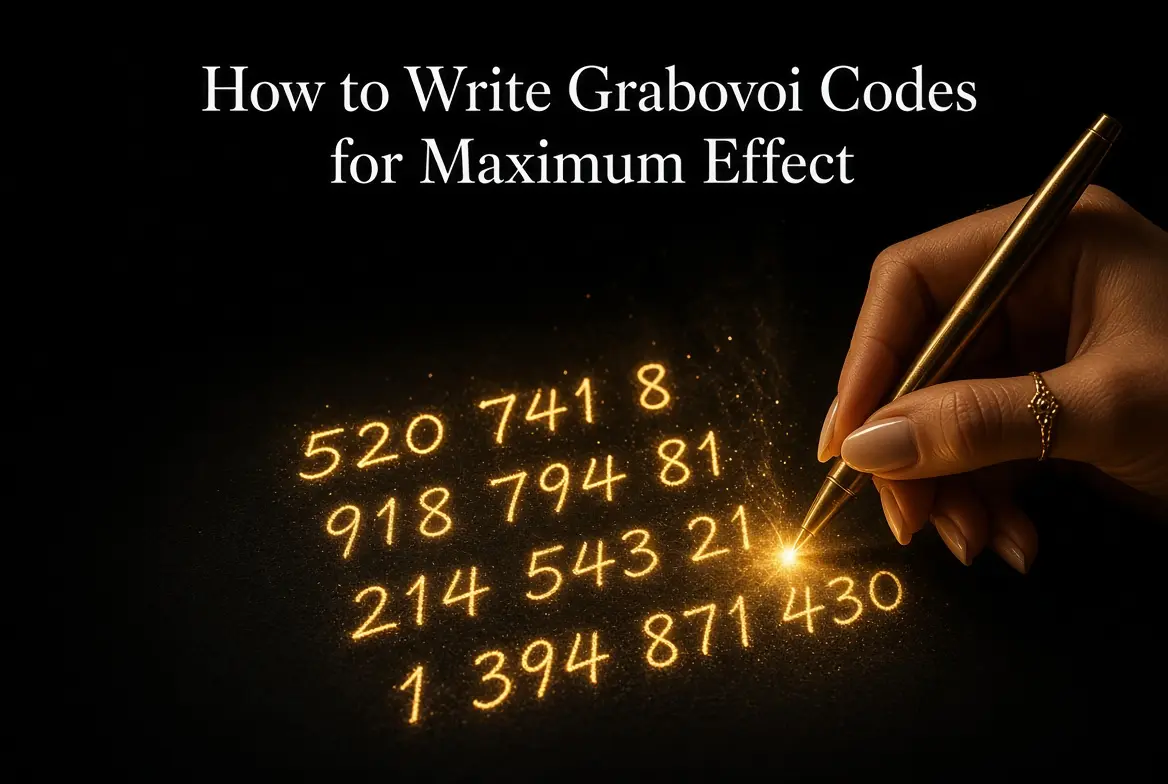
The number is a container. A focal point. A specific sequence that, in Grabovoi’s system, corresponds to a particular energetic frequency. But a container holds nothing if there is nothing inside it. Writing 520 741 8 on a piece of paper while thinking about what you want for dinner is not a Grabovoi practice. It is handwriting.
What actually produces results is the state you bring to the writing. The intention, the internal environment, the quality of focus — these are what the code carries. Everything in this article is about how to create that state correctly before you pick up the pen.
The most powerful Grabovoi session is not the longest one or the most elaborate one. It is the one where the person writing is in the most genuine state of alignment with what they are asking for.
The Environment — Before You Write Anything
Physical stillness comes first. Not meditation in the formal sense — just the absence of multitasking. No television on in the background. No phone beside you. The practice requires enough stillness that you can actually feel what you are doing rather than performing a task on autopilot.
Two minutes of quiet before you begin changes the quality of everything that follows. Sit. Breathe a few times consciously. Let the pace of the day drop. This is not ceremony — it is the practical creation of a mental state where intention can actually land.
Handwriting, not typing. This is consistent across Grabovoi’s own methodology and across the folk practice traditions that developed around his codes. The physical act of forming the numbers with a pen engages the body in the intention in a way that typing does not. The tactile connection matters. Use a pen you like, paper you can feel. The sensory quality of the experience contributes to the depth of the state.
The State — What You Are Generating Inside
This is the part most guides on Grabovoi codes skip, and it is the whole practice.
Before you write the code, generate the feeling of already having what you are asking for. Not hoping for it. Not wanting it. The felt sense — even a small one — of it being real right now. This is the hardest part and it is also the mechanism through which the code works.
Grabovoi’s own theoretical framework describes these codes as frequencies that resonate with specific states of reality. The resonance requires you to be in a matching state, at least partially, when you work with the code. A code written from lack — from the feeling of not having, from desperation or urgency — sends a contradictory signal. The code says abundance. The internal state says absence. The absence tends to win.
If generating the feeling of already having something feels impossible, start smaller. Instead of ‘I have complete financial freedom,’ try ‘I am moving toward financial freedom and the direction is right.’ The feeling of correct direction is more accessible than the feeling of full arrival, and it is still not the feeling of lack.
The internal state when you write is not a nice addition to the practice. It is the practice. The code directs the state. The state is what actually produces the result.
The Writing — How to Do It
Write the code slowly. This is not the time to move fast. Slow writing keeps attention in the act rather than letting the mind drift ahead. Form each digit deliberately.
Say the code aloud as you write it, if that feels natural. The combination of writing and vocalizing engages more neural pathways simultaneously and tends to deepen the intentional state.
Write it once with absolute attention, or repeat it. Seven and nine repetitions are the most commonly used in practice traditions. The number of repetitions matters less than the quality of presence in each one. One genuinely focused repetition outperforms ten mechanical ones.
After each repetition, briefly reconnect to the feeling you generated before you started. Do not let the writing become automatic. Stay in the state.
The Release — What You Do After
This is the step most people skip and it is the one that separates people who see results from people who do not.
After you finish writing, release the outcome. Put the journal down. Do not immediately check to see if anything has changed. Do not spend the rest of the morning thinking about whether it worked. The release is the signal to your system that you genuinely trust the process — and trust is itself a frequency.
Attachment to the outcome — the constant monitoring, the anxious checking, the ‘is it working yet’ — generates the same frequency as doubt. Doubt undermines what the code practice built. The release is not passive resignation. It is active trust.
Take one small action in the direction of what you wrote. Not a grand gesture — one small thing. The action tells your system and the external world that you believe the movement is real. Send the email. Make the call. Start the document. Do one thing. Then let it go.
Timing — When to Write for Maximum Effect
Morning, immediately after waking, before the day’s demands have fully activated. The mind is closest to the subconscious during the first minutes of waking — the hypnopompic state — and intention lands deeper during this window than it does later in the day.
Evening, before sleep. The subconscious processes whatever it received last through the night. Writing the code before sleep gives it eight hours of reinforcement. Most practitioners who see strong results report writing their codes in the evening.
Moon phases add an additional layer that is optional but reported as effective. New moon for new intentions, beginnings, attraction. Full moon for releasing blocks, completing cycles, amplifying what is already in motion.
Consistency over timing. A daily practice at an imperfect time produces better results than a perfect-timing practice done inconsistently. Twenty-one days is the minimum before making any assessment of whether the practice is working. Most observable results appear in the second or third week, not the first.
The Honest Part
Grabovoi codes work within the framework of intentional practice — the psychology of directed attention, the neuroscience of belief and behavior, and the genuine effects of sustained focused repetition on what you notice and pursue. Whether they operate through a metaphysical mechanism beyond that is genuinely contested and I am not going to tell you it is settled.
What is not contested: people who do this practice correctly and consistently report results. The results tend to be proportional to the quality of the internal state during practice, which is consistent with what we know about how intention-based practices work generally.
The code is real. The method matters. The state is everything. Start tonight.
SHARE THIS with someone who has been writing Grabovoi codes without seeing results 🔢✨
— GinaStars.com