GinaStars.com
Your aura is not a fixed thing. People talk about it as if it is a permanent color assigned at birth like a hair color, but that is not how it works. The aura shifts. It changes with your emotional state, your physical health, what you have been through recently, and where you are in your spiritual development. A reading done today might look different from one done in six months — and both would be accurate.
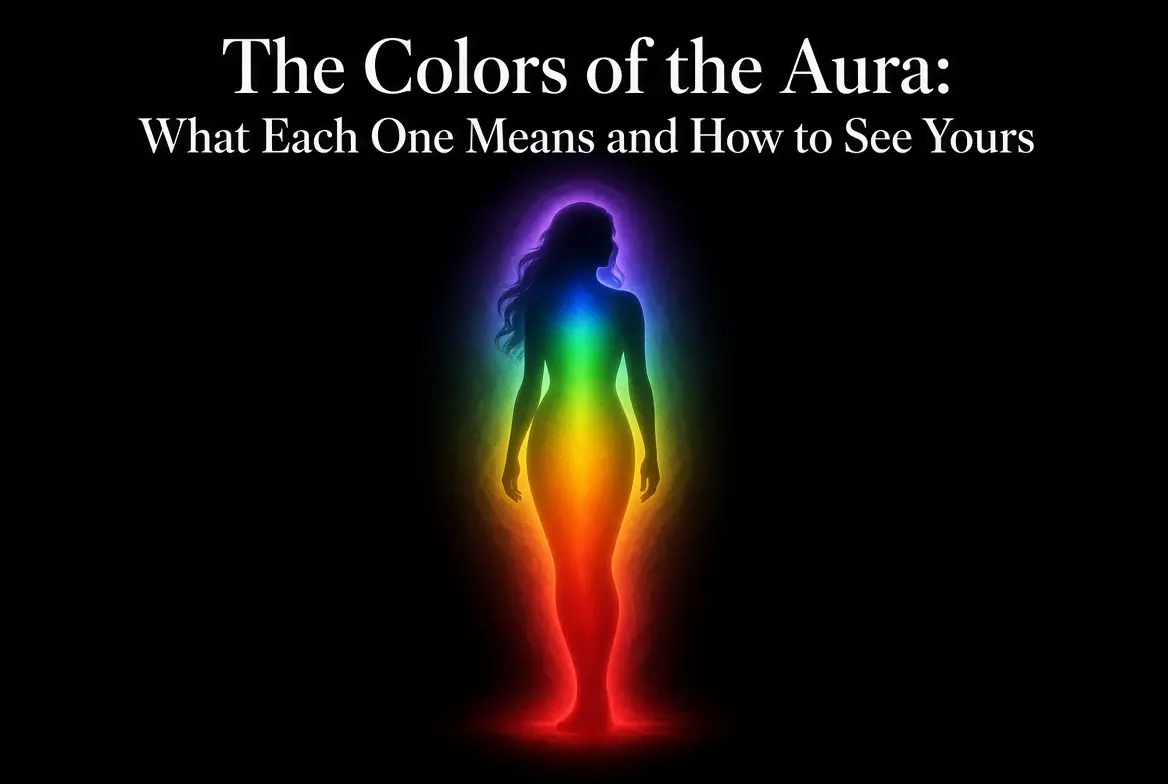
The colors I am describing here are the ones that appear most consistently in aura readings and in the reported experiences of people who work with energy. They are associated with the chakra system, which maps roughly to the same locations on the body. The overlap is not coincidence — both systems are describing the same energy field through different frameworks.
What each color means, and what it says about the person carrying it right now.
The aura is not a status symbol. A purple aura is not better than a red one. Each color describes a particular state or orientation. Understanding yours is about self-knowledge, not self-improvement.
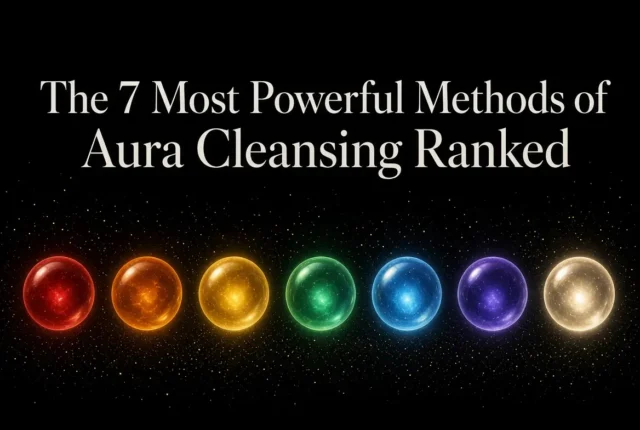
The Colors and What They Mean
Red
Red auras appear in people who are strongly connected to the physical world — physically energetic, grounded, oriented toward action and survival. This is not a warning color. It is the color of someone who is very much alive and present in their body.
When the red aura is clear and bright, it indicates vitality, passion, and the drive to move and build. When it appears muddy or dark, it sometimes indicates anger that has not been processed, or fear that is running at a low level underneath ordinary functioning. People who have been in high-stress or survival-mode situations for extended periods often carry a dark red aura until they have had time to discharge the accumulated stress.
Red is the color most associated with the root chakra — the center at the base of the spine that governs the sense of safety, belonging, and physical survival. A strong red aura usually means someone who has their feet on the ground. A turbulent red aura usually means someone whose sense of safety is under pressure.
Orange
Orange sits between red and yellow and carries qualities of both. It is the color most associated with creativity, sexuality, emotional expression, and the pleasure of being alive. People with strong orange auras tend to be warm, expressive, socially engaging, and comfortable with their own emotions and desires.
The sacral chakra — located below the navel — is orange, and it governs creativity, sexuality, and emotional fluidity. When someone is in a period of creative output, new relationships, or emotional opening after a period of closure, orange often intensifies in their field.
A muddy or brownish orange sometimes indicates creative blocks, emotional repression, or an unhealthy relationship with pleasure and desire — either denying these things entirely or becoming consumed by them without balance.
Yellow
Yellow auras are associated with the solar plexus — the center of personal power, self-confidence, and individual will. People with yellow auras tend to be intellectually active, optimistic, and comfortable with their own authority. They often have a natural charisma that comes not from performance but from genuine self-assurance.
Bright yellow indicates someone operating from a strong sense of self. Golden yellow specifically is associated with high spiritual development — the person who has integrated their sense of personal power with wisdom. Pale or washed-out yellow sometimes indicates anxiety or someone whose confidence is fragile, propped up by external validation.
I notice yellow auras most often in people who are in learning phases — students in the broad sense, people who are actively engaged with ideas and growing their understanding. The intellectual curiosity lights up this part of the field.
Green
Green is the color of the heart chakra, and green auras are associated with love, healing, and compassion. People with green-dominant auras are typically natural healers — not necessarily in a professional sense, but in the sense that other people feel better after being around them. They tend toward empathy and genuinely care about other people’s wellbeing.
Bright emerald green indicates someone whose heart center is open and whose love is given freely without conditions. Pale or yellowish green can sometimes indicate someone who is in the process of healing their own heart — someone for whom the open-heartedness is still being cultivated rather than fully established.
Dark or murky green sometimes appears in people who are in envy or jealousy, which is interesting because those emotions live in the same heart center as love — they are the shadow side of caring about connection.
Blue
Blue auras correspond to the throat chakra and are associated with communication, truth, and the expression of one’s authentic self. People with blue-dominant auras tend to be articulate, honest, and someone others trust with their real thoughts. They often feel a strong pull toward expressing themselves — through writing, speaking, music, or other forms of communication.
Bright sky blue indicates someone who communicates with clarity and integrity. Deep cobalt or royal blue is associated with higher intuitive ability and a strong connection to inner truth. Pale or muddy blue sometimes appears in people who are holding back what they genuinely think — who are not saying the things they need to say.
I find that people going through periods of finding their voice — whether that means speaking a hard truth, starting creative work, or leaving a situation that required them to be quiet — often show significant blue activity in their aura.
Purple and Indigo
Purple and indigo auras are associated with the third eye and crown chakras — the centers of intuition, spiritual awareness, and connection to something larger than the individual self. People with purple or indigo auras tend to be deeply intuitive, often spiritually oriented, and frequently describe experiences of knowing things before they could have logically known them.
Indigo specifically is associated with people who are highly sensitive perceptually — who pick up more information from the environment than average, who are affected by the energy of places and people in ways that others are not. Many of the people who identify as empaths have significant indigo in their aura.
Violet or purple at the crown indicates someone who has done significant spiritual development — not necessarily in an organized religious framework, but in the sense of having developed a genuine relationship with the nonmaterial dimensions of experience.
White and Gold
White auras are relatively rare and tend to appear in people at moments of significant spiritual opening, or in those who have done sustained spiritual practice over many years. White in the aura is associated with purity in the specific sense of a cleared field — someone who is not carrying significant energetic debris from unresolved experiences.
Gold is associated with divine wisdom and a high level of spiritual evolution. It sometimes appears around the crown or as highlights in an otherwise colored aura. When gold is the dominant color, it tends to indicate someone who is being used as a conduit for something larger than themselves — healers, teachers, or people who have a particular calling and are actively living it.
Black and Gray
Black in the aura is not evil. I want to be direct about this because the association creates unnecessary alarm. Black typically indicates that the person is holding something they have not processed — grief, trauma, energy they picked up from others and never released. It is a sign of accumulation, not of character.
Gray auras often appear in people who are exhausted, either physically or emotionally depleted. It is the color of the drained field — not damaged, just running low. Gray often clears significantly with rest, solitude, and some form of energetic clearing practice.
How to Start Seeing Auras
Most people who learn to see auras start by practicing on themselves in a mirror, or by looking at other people against a plain light-colored background. The technique is specific and counterintuitive: you do not look directly at the person. You look slightly past them, or just to the side, and you relax your gaze — the kind of soft focus you use when you are looking at a Magic Eye picture.
What most people see first is not color but a slight shimmer or haze at the edges of the body. With practice, this becomes more distinct. Colors tend to come later, and often appear first as impressions rather than vivid visual phenomena — a sense that the field around someone is warm or cool in tone, rather than a clear perception of orange or blue.
Some people develop this perception quickly. Others spend months before they notice anything. Both experiences are normal. The perception is a skill, not an innate gift that some people have and others do not. Like most skills, it develops with consistent practice and plateaus that eventually break.
Photographing your own aura is also possible through Kirlian photography, which uses high-voltage electricity to capture the electromagnetic field around objects on film. The results are interpreted differently by different practitioners, and the scientific community is divided on what exactly is being captured. If you want an external reference point rather than relying purely on developing your own perception, it is worth exploring.
The point of knowing your aura color is not to categorize yourself. It is to understand what your energy is doing right now — and to have a way of noticing when it changes, which tells you something about what has changed in you.
SHARE THIS with someone who wants to understand their own energy 🌈✨
— GinaStars.com